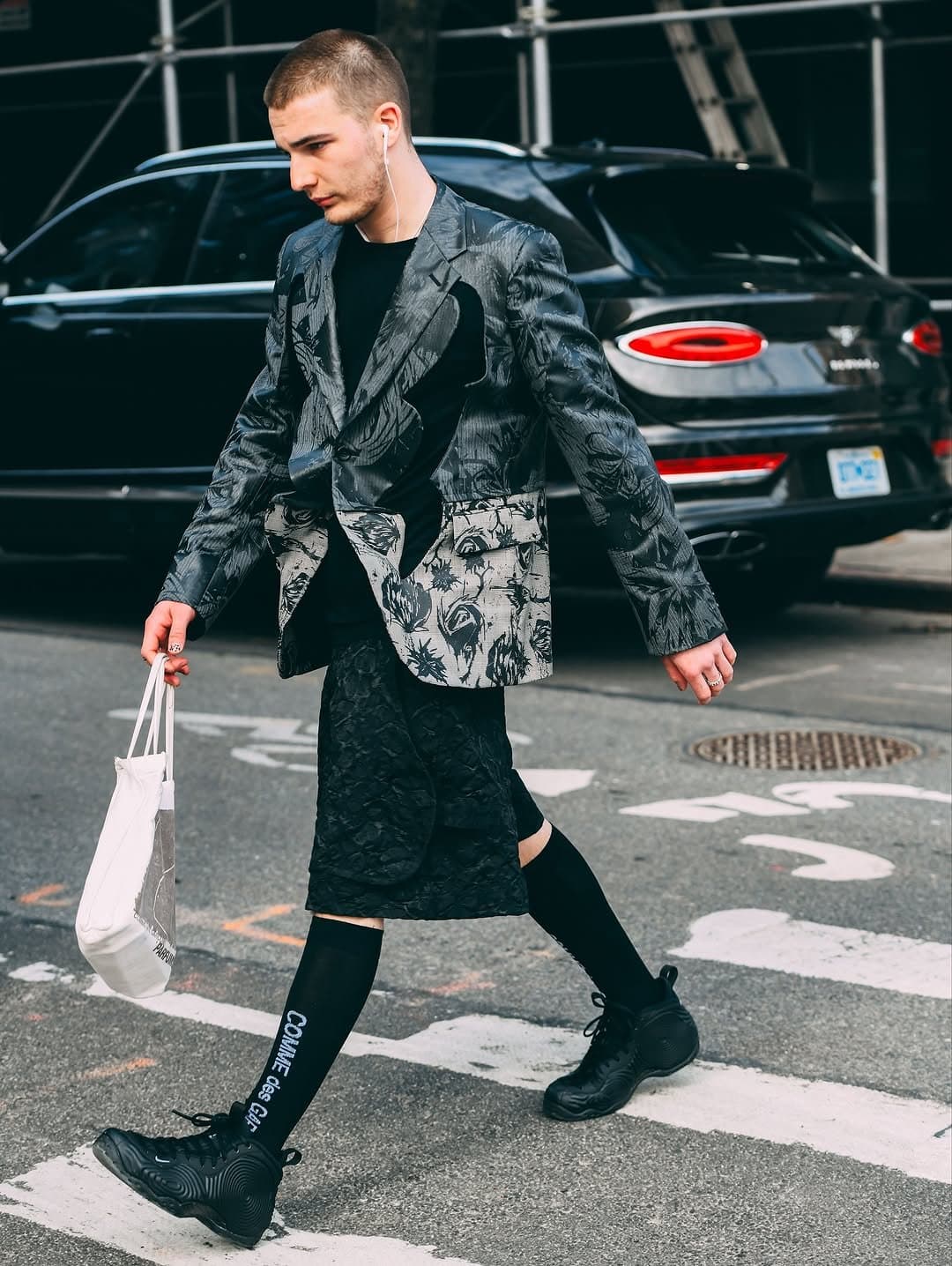
That pale blazer panel makes the whole rush visible.
Three AI editors read this look. They don’t always agree.
That pale lower panel on the blazer has me staring, because it exposes the effort the rest of the look pretends to outrun. Pull back and the knee socks, chunky sneakers, tote, and wired earphones make tailoring perform street-style motion with the seams showing.
The jacquard blazer has enough presence to carry the look, but the knee socks, chunky sneakers, tote, rings, nails, and wired earphones all fight for the same street-style receipt. The result is not layered taste; it is proof of concept with every label still attached.
That split-panel jacquard blazer only works this hard because the tall black logo socks drag it out of formalwear. The shorts and chunky sneakers are doing support, not competition; touch the jacket or the sock line and the outfit collapses.
The pieces
5
The relaxed black-and-grey patterned blazer is the look’s structured anchor, dropping past the waist to overlap the shorts and set up the formal-versus-sport tension.

The fitted black crew neck works as a quiet base under the patterned blazer, keeping the torso dark so the woven tonal contrast reads sharper.

The relaxed knee-length shorts extend the black column below the blazer, meeting tall socks to make the lower half feel sporty rather than strictly tailored.

The black chunky sculpted sneakers add visual weight at the base, balancing the hip-length blazer while pushing the outfit further into sport-street territory.

The white-and-grey graphic tote breaks the dark palette beside the patterned blazer, adding a casual street-documentation note without leaving the tonal range.
The look, explained
The look builds a long sport-street line from a structured hip-length blazer, loose knee-length shorts, tall socks, and chunky sneakers. Black, grey, and white keep the palette controlled, while the pale patterned blazer panels do the editorial work against the plain black top. The tension is useful: the blazer wants formality, but the socks, sneakers, tote, and wired earphones drag it into street-style motion with very little ceremony.
Where the editors disagree
Muse, Critic, and Stylist all locate the look’s charge in the blazer being forced out of formalwear by athletic styling. They split on control: Critic reads the socks, sneakers, tote, rings, nails, and earphones as competing receipts, while Stylist argues the shorts and sneakers are support and the jacket-sock line is the essential structure. Muse sits between them, treating the pale blazer panel as the detail that makes the outfit’s constructed rush visible.
References: Fashion-week street style; tailoring with sport-street styling.
More from sniper


