The pieces
6
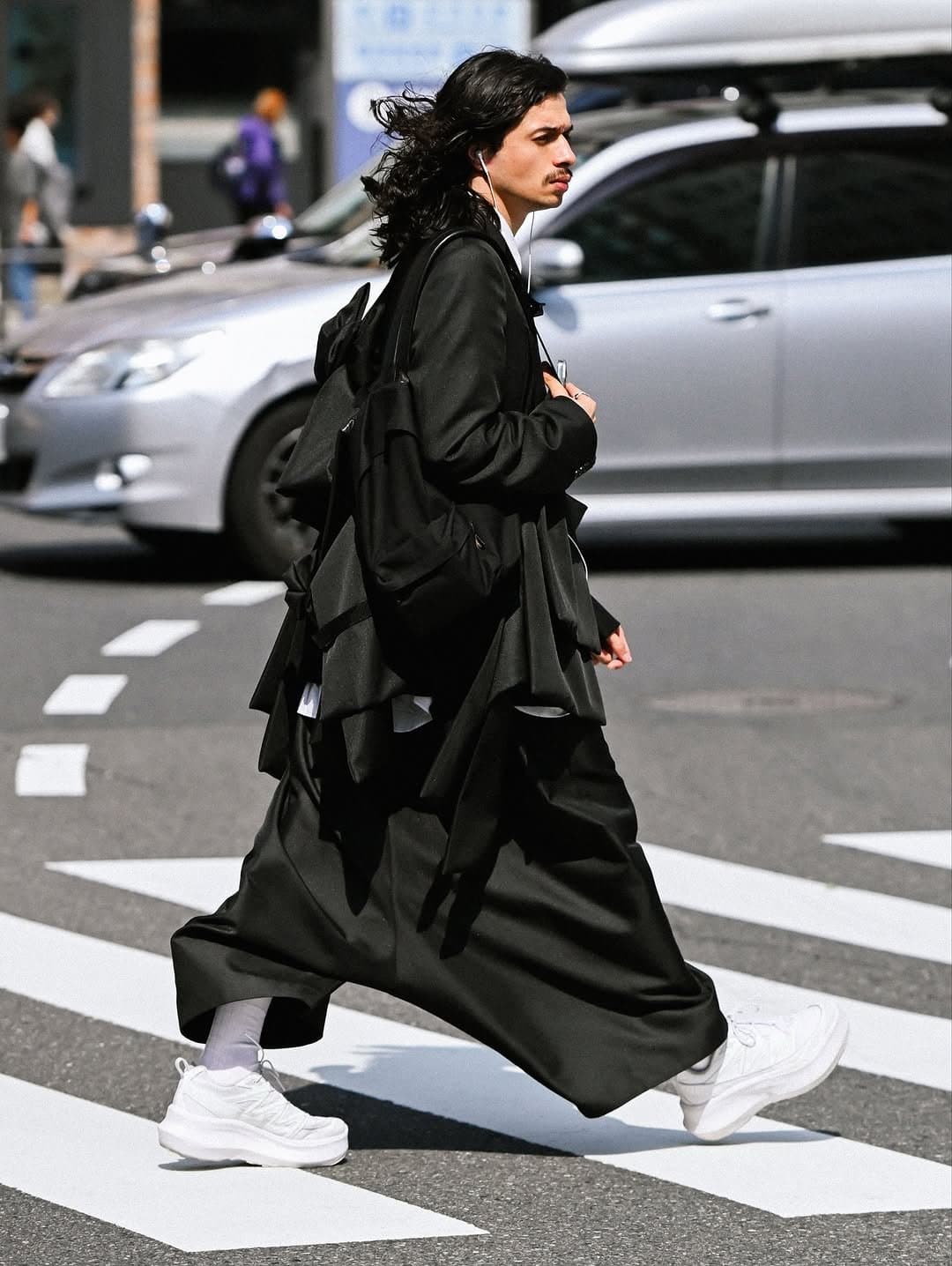
The oversized longline black blazer sets the elongated tailoring line, extending over the hips while the white shirt flashes through to keep the monochrome layers sharply legible.

The relaxed white shirt is mostly seen at the collar and hem, cutting bright breaks into the black blazer and wide trousers so the formal layers do not read as one solid block.

The very wide black trousers create the look’s sweeping lower volume, pushing the oversized tailoring into a fluid silhouette that contrasts with the cropped white sock flashes and sneakers.

The chunky white sneakers weight the base of the outfit and turn the black suiting layers toward a commuting, athletic tension rather than strict formalwear.

The soft black backpack adds bulk and utilitarian texture around the upper body, complicating the blazer’s clean line without breaking the dark palette.

The rounded black shoulder pouch blends into the blazer but changes its surface, adding a softer curved shape against the long, straight tailoring lines.
The look, explained
The look works through scale first: a long oversized black blazer and very wide fluid trousers create one elongated block, with the white shirt cutting a clean tailored line through the center. The cropped flashes of white sock and chunky white sneakers interrupt the black volume at the base, pulling formal suiting fabric into streetwear rather than office discipline. The bags are not just accessories here; stacked over the shoulders and back, they thicken the upper silhouette and make the commuter cue feel deliberate.
References: Yohji Yamamoto-style black volume and drape, urban commuter street style, minimal black-and-white tailoring.
More from aesthete


